
Cleanroom Facts
Interesting Cleanroom Facts
The concept of the modern cleanroom was somewhat of a mystery to the average person until recent years. Thanks to a handful of Hollywood movies, NASA, and several popular commercials for semiconductor companies, cleanrooms are now much more mainstream. More and more companies are implementing controlled environments to improve product quality and production efficiency. Fast growing sectors such as biotechnology, pharmaceutical, life sciences, semiconductor, and other high-tech industries continue to utilize cleanrooms. There's no denying cleanrooms and controlled environments are here to stay and will continue to grow. Let's look at some interesting “not so common knowledge” cleanroom facts.
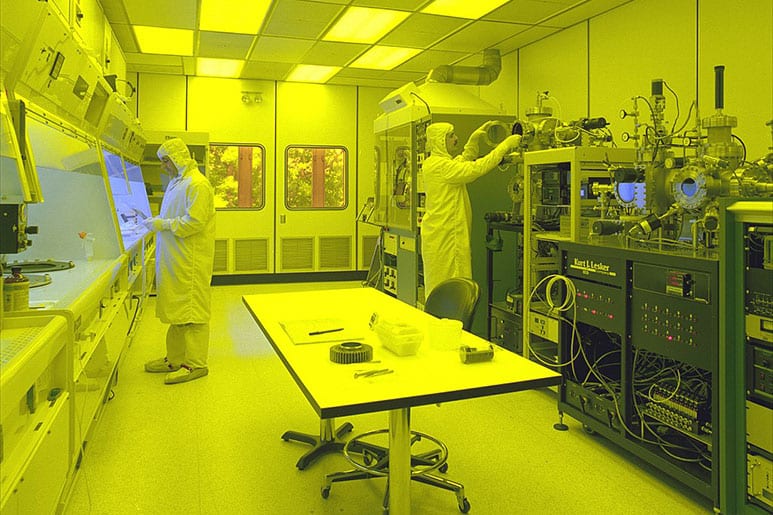
Cleanroom used for the production of microsystems. The yellow (red-green) lighting is necessary for photolithography, to prevent unwanted exposure of photoresist to light of shorter wavelengths.
What is a cleanroom?
A cleanroom is a controlled environment where contaminants such as dust, airborne microbes, and particles are filtered out to provide the cleanest area possible. The enclosed area has measures in place to control, monitor, and maintain a desired internal environment.
The first ever “clean room”
The concept and development of a “clean room” goes back to the 1860s when Scottish surgeon Joseph Lister sought to control the presence of bacteria in hospital operating rooms. He focused on airflow and cleaning measures to maintain the environment.

Doctor treating patients inside an operating room. Image Credit: commons.wikimedia.org
The modern-day cleanroom
The modern-day cleanroom was invented in 1961 by Willis Whitfield. He implemented the concept of ventilation with unidirectional, laminar airflow, supplied through a series of HEPA filters.
Cleanroom Industries
Industries like microelectronics, optics, biotechnology, semiconductor manufacturing, pharmaceutics, and nanotechnology all rely on cleanroom technology when producing their products. Additionally, organizations involved in research and development also utilize cleanrooms.
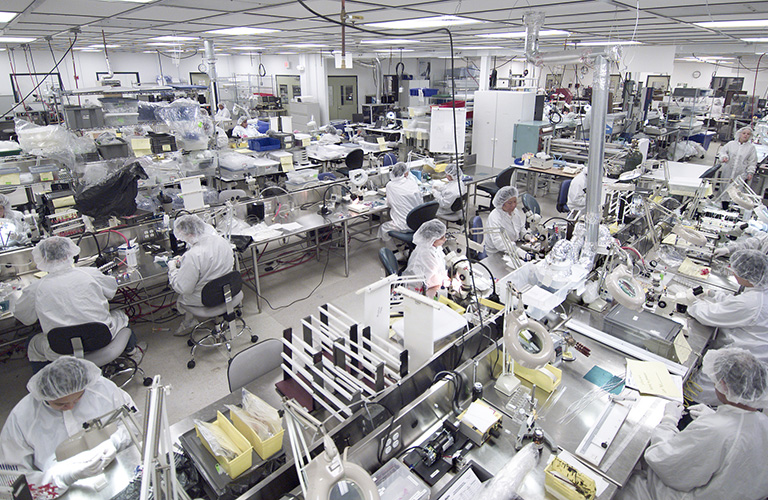
Workers inside a cleanroom
Relative size of particulate matter The cross section of a human hair is 50 microns, whereas dust and bacteria is approximately .5 microns. That is 1/100th of the size of a strand of a human hair!
A few notes on particles
- A person sitting still emits 100,000 particles/minute
- Getting up or sitting down generates 2.5 million particles/minute
- Slow walking generates 5 million/minute
- Rapid movement like climbing stairs generates 110 million particles/ minute!
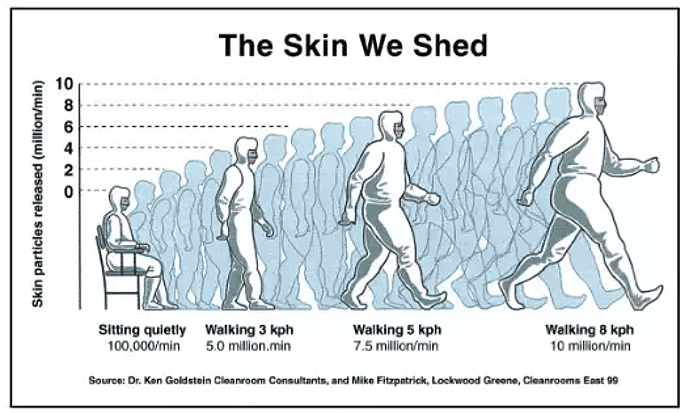
"The Skin We Shed"
Global cleanroom technology value
In 2020, the global cleanroom technology market size was valued at USD 4.0 billion and is projected to increase at a compound annual growth rate (CAGR) of 5.4% from 2021 to 2028.
Source: https://www.grandviewresearch.com/industry-analysis/cleanroom-technology-market
One final fact”...
High-Tech Conversions was founded in 1995 and is an industry-leading supplier of cleanroom supplies and innovative nonwoven products.

All-Purpose Cleaner & Degreaser for Professional Facilities: Meet EvoGreen™
Meet EvoGreen™ All-Purpose Cleaner & Degreaser, a high-yield concentrate for professional facilities, heavy-duty degreasing and everyday cleaning.


Why Is Handwashing So Important?
Proper handwashing is one of the simplest yet most effective ways to protect yourself and others from spreading germs.
Hospeco Brands Group Canada Janitorial Supplies. Now online!
Hospeco Brands Group is proud to welcome Canadian customers to a new website experience.

Why Cleaning Industry Advocacy Matters to Every Facility We Serve
The cleaning and facility solutions industry doesn't just respond to change. It helps shape it.
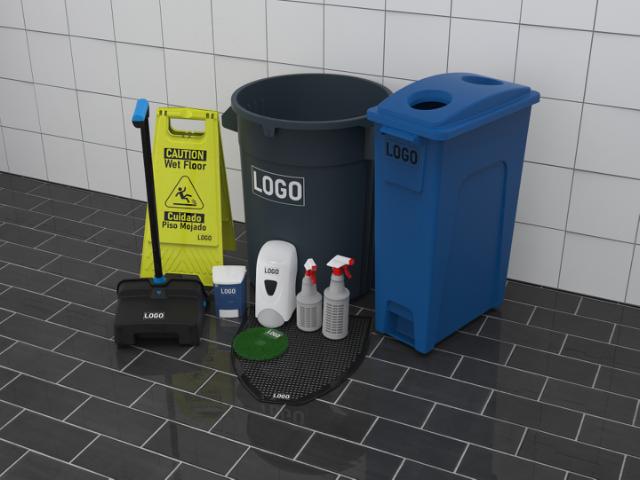
Extend Brand Awareness with Custom Durable Products from Hospeco Brands Group
Branding does not stop at signage, websites, brochures, or sales materials. The strongest brands reinforce their identity at every customer touchpoint, including the everyday products people use throughout a facility.